
TRITON LOCKSMITH
Licensed · Bonded · Insured
WHAT INFORMATION YOU ACTUALLY NEED - AND WHERE TO FIND IT
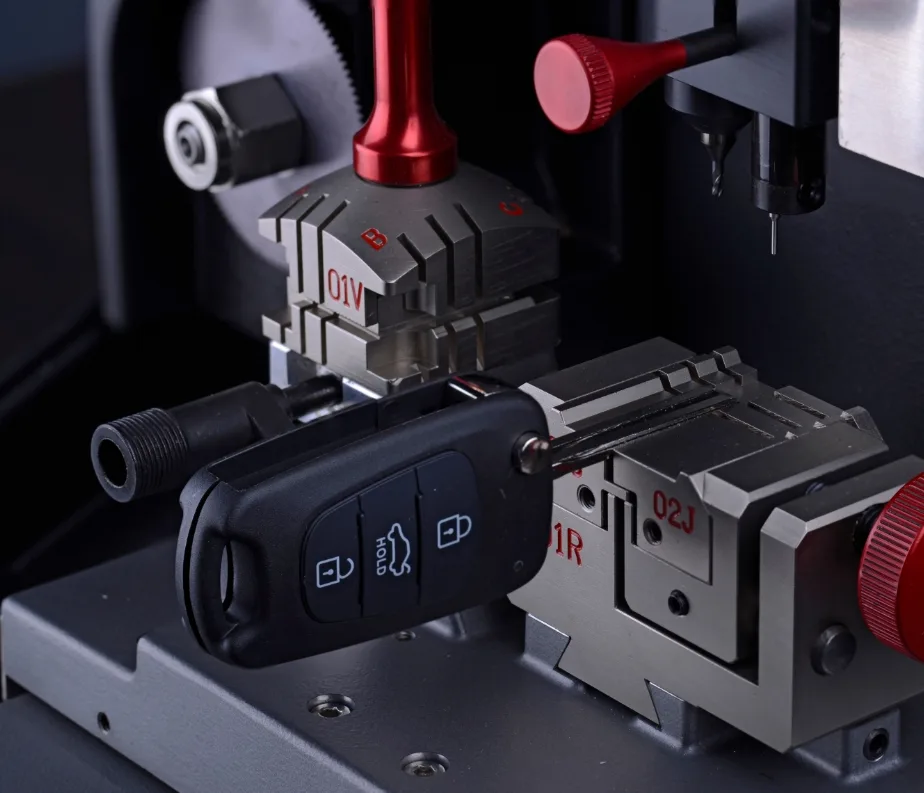
The vehicle identification number appears on the driver-side door jamb, the lower-left windshield corner, and on insurance and registration documents. If the car is locked and your documents are inside, a photo of the registration taken previously - even on your phone - is often sufficient for the Triton dispatcher to pull the correct key profile.
Florida DBPR licensing requires a government-issued ID and proof of ownership before any locksmith work is performed on a vehicle. The Triton technician checks these documents on arrival. A registration, title, or insurance card satisfies the ownership requirement - this is separate from whether the VIN is used for key blank selection.
Once identity is confirmed, the Triton tech cross-references the vehicle details against a professional locksmith database to identify the exact transponder car key type, blade cut specification, and immobilizer programming sequence needed. With or without the VIN recited from memory, a qualified locksmith has multiple routes to the correct key data.
Triton Locksmith serves drivers who have lost all keys to their vehicle across Boca Raton ZIP codes 33428, 33431, 33432, 33433, 33434, 33486, 33487, 33496, and 33498. All-keys-lost service is available for domestic, Asian, and European vehicle makes.
The service addresses lost-key replacement from start to finish - VIN lookup, identity verification, key blank selection, transponder cut and program, immobilizer re-enrollment, and remote keyless system pairing - without requiring a tow to a dealership.
Triton responds to lost-key calls from West Boca, East Boca, Mizner Park, Town Center, Boca West, Boca Pointe, the FAU area, and all surrounding neighborhoods within the Boca Raton service zone.
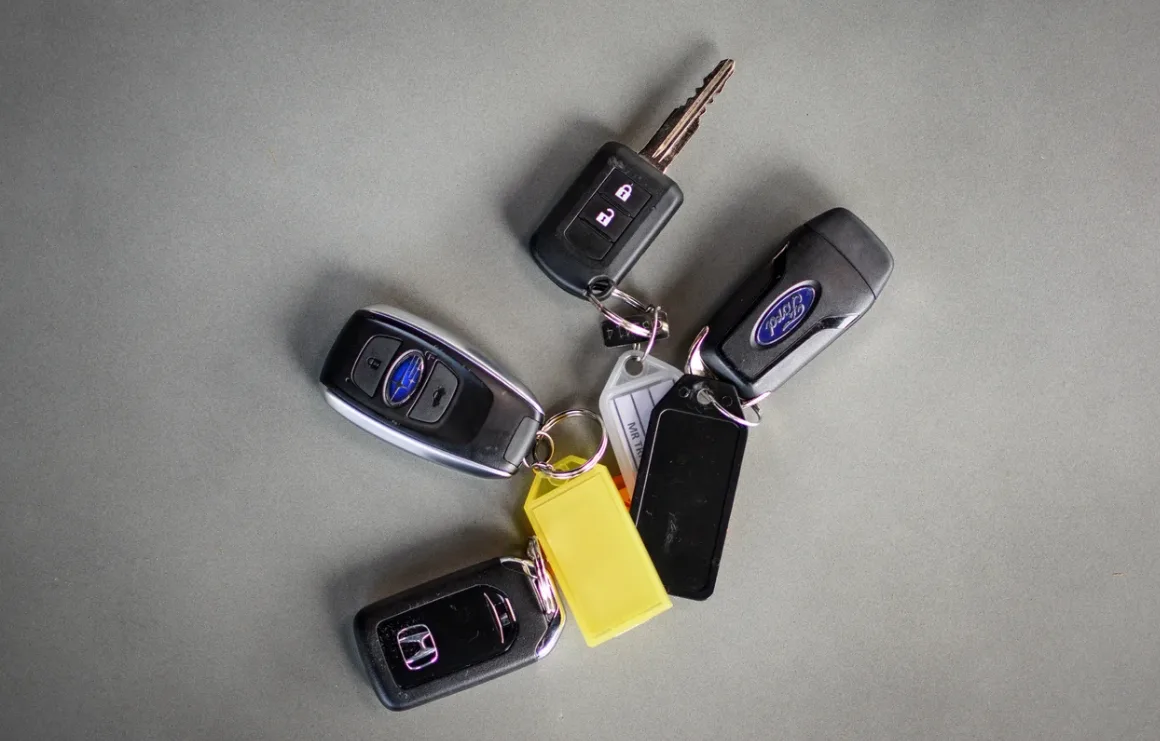
The vehicle identification number is a 17-character code assigned to every vehicle at manufacture. It encodes the make, model, year, production plant, and a unique serial number. For automotive locksmiths, the VIN is primarily a lookup key - it points to the correct transponder car key type, the blade cut specification, and the immobilizer programming profile for that exact vehicle.
Modern vehicles carry an immobilizer system that uses a rolling code handshake between the key's embedded chip and the car's engine control unit. Without matching the correct chip and programming the right rolling code sequence, the engine will not start even if the physical key turns in the ignition. The VIN helps the technician select the right equipment before arriving at your location rather than diagnosing it on-site.
The VIN also appears in the vehicle's EEPROM data stored by the immobilizer module itself. On all-keys-lost jobs where no working key remains, the Triton technician may read this data directly through the OBD-II port, which means the VIN you provide is cross-checked against what the car's own systems report - an important anti-theft verification step.
The most accessible VIN location when a vehicle is locked is the lower-left corner of the windshield, visible from outside the car. The VIN is stamped on a small metal plate attached to the dashboard and can be read through the glass without opening the door. This is the standard position adopted by automakers following NHTSA requirements in the mid-1970s.
If you cannot clearly read the windshield VIN, additional sources include your vehicle registration, insurance card, or the title document. All of these are issued with the full 17-digit VIN printed on them. Insurance documents stored in a phone app - common for Florida drivers carrying digital proof of insurance - also contain the VIN and are generally accepted by Triton dispatchers over the phone.
For Boca Raton drivers who are stranded without any documents, the technician can often identify the key profile from the year, make, model, and trim level alone. Wikipedia's VIN article explains the full 17-character encoding structure if you want to decode yours manually before calling.
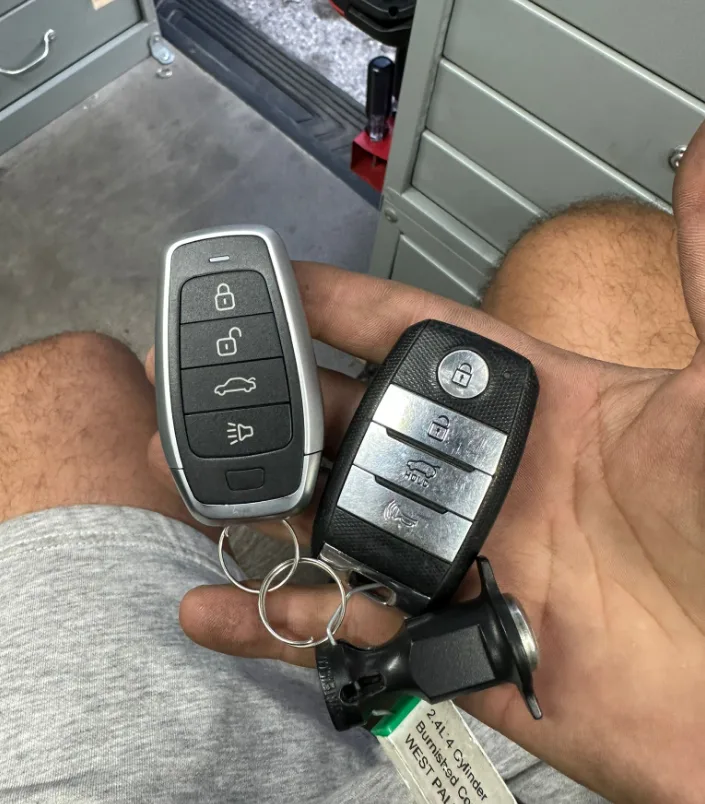
Yes, in most cases. Professional automotive locksmiths use several routes to identify the correct key profile when the VIN is not immediately available. Year, make, model, and trim level narrow down the field significantly for common domestic and Japanese vehicles. A physical inspection of the ignition cylinder and door lock, when accessible, can also confirm the blade cut specification directly.
The more complex scenario is an all-keys-lost job on a vehicle with a high-security immobilizer that requires direct EEPROM reading. In these cases the Triton technician reads the vehicle's own stored data through the OBD-II port, which bypasses the need for you to supply the VIN externally. The VIN simply speeds up the pre-arrival preparation; it is not a hard requirement for the work itself.
Triton recommends storing a photo of your registration - including the VIN - in your phone's photos app as a routine precaution. For car key replacement Boca Raton customers, this single step eliminates most pre-appointment friction and shortens the overall call time by several minutes. Florida DBPR license holders are required to document vehicle data at every service call regardless of how it was obtained.
These are two distinct requirements that people often conflate. The VIN is a technical lookup tool used to identify the correct key hardware and programming profile. Proof of ownership is a legal and regulatory requirement imposed by Florida DBPR licensing rules to confirm the person requesting service has authority over the vehicle.
You can satisfy the proof-of-ownership requirement with a registration, title, or insurance card - documents that happen to contain the VIN but are required for a different reason. Conversely, reciting the VIN from memory does not substitute for a government-issued photo ID and ownership document. The technician needs both categories of information, but they serve separate purposes.
Triton takes this distinction seriously because automotive locksmith fraud - using mobile key services to gain unauthorized vehicle access - is a documented risk that professional locksmiths are licensed to prevent. Every Triton technician is trained to complete the full verification sequence before opening a toolkit, consistent with ALOA Security Professionals Association best practices for automotive locksmith calls.
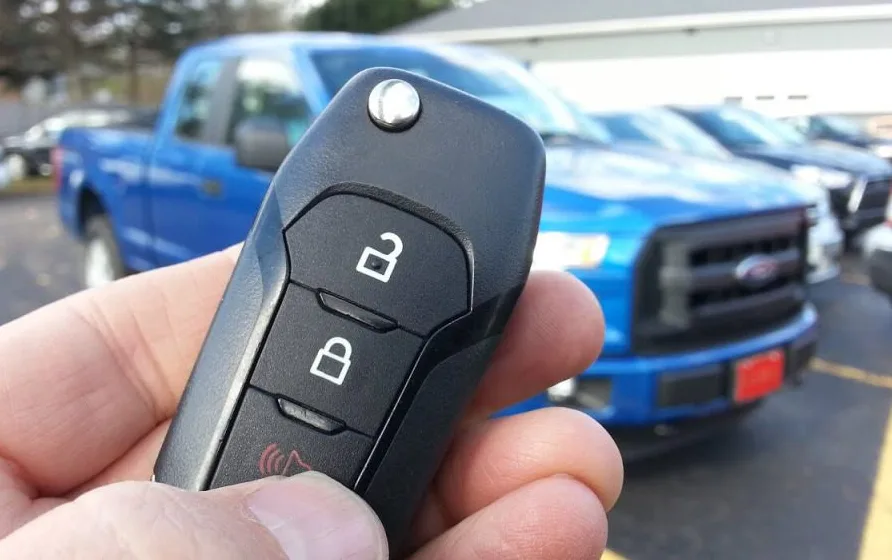
When all keys are lost, the replacement process is more involved than duplicating an existing working key. The immobilizer module - which stores the rolling codes for every authorized key - must be cleared and re-enrolled from scratch. This is often done via OBD-II access, but on some vehicles it requires reading and rewriting EEPROM data directly, a process that takes additional time and specialized hardware.
The physical key itself may be a standard transponder car key, a laser-cut high-security key, or a proximity smart key depending on the vehicle. Each type involves different blade cut specifications and chip programming sequences. The Triton dispatcher uses the year, make, model, and VIN (if available) to determine which category applies before the technician leaves the shop, ensuring the correct blanks are on the truck.
Remote keyless system fobs are also part of the all-keys-lost enrollment, since the immobilizer registry reset typically clears fob authorizations as well. Triton programs all replacement fobs during the same appointment so the customer leaves with a complete, fully functional key set rather than requiring a follow-up call.
The vehicle immobilizer is an electronic anti-theft system mandated by European insurance bodies in the 1990s and now standard on virtually all new vehicles worldwide. It stores an authorization registry - a list of rolling codes tied to each programmed key chip - and refuses engine start if the presented key does not match an entry in that registry. When all keys are lost, this registry must be cleared and rebuilt with new entries.
The Triton technician connects a professional programmer to the OBD-II diagnostic port and uses make- and model-specific software to access the immobilizer control module. For vehicles where the OBD-II route is blocked by manufacturer restrictions, the technician may access EEPROM data directly from the immobilizer module - a process that requires additional disassembly time and higher-tier programming hardware.
After the registry is cleared, the new transponder key is enrolled as the first authorized entry. Any additional keys or fobs are enrolled in the same session. The technician then runs multiple ignition cycles to confirm the system consistently accepts the new key before closing the appointment.
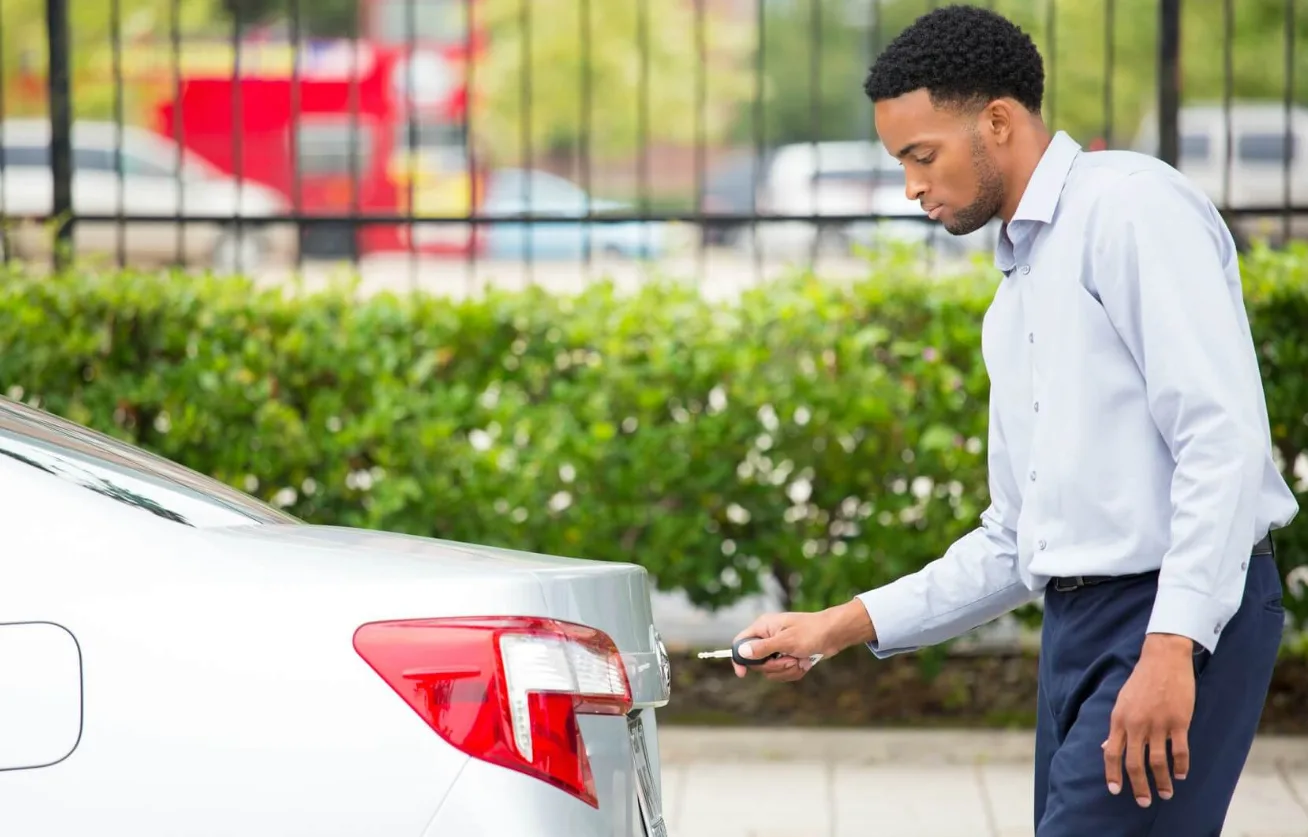
Having the right information ready before the Triton Locksmith technician arrives keeps the appointment efficient and avoids delays. The items that matter most are: your government-issued photo ID, a vehicle registration or insurance card (digital copies accepted), and your vehicle's year, make, model, and trim level. The VIN - visible through the windshield or on registration documents - is helpful but not a hard blocker.
If you are in a gated community, a managed parking structure, or a location that requires entry authorization, let the Triton dispatcher know when you call (561) 524-8500. The technician will coordinate access before departing rather than waiting at a gate upon arrival. This is especially relevant for Boca West and Boca Raton Resort area properties.
Finally, bring all other keys and fobs you currently own for the vehicle, even if they are spare keys you rarely use. Re-enrolling every piece of hardware during the same session costs no extra trip charge and prevents scenarios where a rarely used spare stops working after the immobilizer is reset.
Dealerships require you to tow the vehicle to their service bay, present proof of ownership, and typically order the key through their parts department - a process that can take one to three business days depending on key availability. Pricing at dealerships is based on OEM parts, which often carries a significant markup over the component cost, and labor rates vary by dealership policy.
A mobile locksmith like Triton comes to your location with all necessary equipment and completes the work in a single visit in most cases. The VIN and ownership verification requirements are the same - both a dealership and a licensed locksmith must confirm you own the vehicle before cutting a key. The practical difference is time: Triton can typically complete an all-keys-lost replacement the same day you call, often within a few hours.
Cost comparisons vary by vehicle and region. National-average locksmith pricing for all-keys-lost scenarios runs $280 to $420, while dealership quotes for the same work on similar vehicles can reach comparable or higher figures when towing, parts markup, and labor are combined. Triton provides a binding quote before work begins so you can make an informed decision before committing.
| Service | Typical Time | Price (national avg) |
|---|---|---|
| All-keys-lost - transponder key program | 60-90 min | $230-$350 |
| All-keys-lost - laser-cut key + immobilizer reset | 75-90 min | $280-$420 |
| All-keys-lost - smart key / proximity fob | 75-105 min | $300-$420 |
| Duplicate key (working key still available) | 15-20 min | $60-$120 |
| Fob-only replacement and program | 20-30 min | $80-$150 |
| EEPROM-required immobilizer reset | 90-120 min | $320-$420 |
National-average pricing - your on-site Triton Locksmith technician provides a binding quote before work begins.
Triton Locksmith has served Boca Raton and Palm Beach County drivers for years, with a specialization in all-keys-lost replacement, transponder programming, and mobile vehicle lockout response. Every Triton technician holds an active Florida Department of Business and Professional Regulation (DBPR) automotive locksmith license and receives ongoing training on immobilizer architectures across domestic, Asian, and European vehicle lines. Triton's 252 five-star Google reviews reflect consistent, verifiable work on the most common and complex lost-key scenarios in the South Florida market.